
THE MORE YOU KNOW
THE BETTER YOU NEGOTIATE

Understanding 'Rentable' vs. 'Usable' Square Feet
All commercial buildings are not created equal. This is evident upon inspection of multiple factors; location, allocated parking, quality of construction, and amenities provided, just to name a few. But one of the most overlooked aspects of a building’s value to the tenant is the efficiency of that particular building when compared to another. This efficiency is in relation to the ratio of the space the tenant actually leases within their four walls (the usable square footage) and the amount of space attributed to all common areas of the building including the lobby, hallways, restrooms, common conference rooms, common kitchen areas, interior break areas, work out buildings, showers/lockers, phone and electrical rooms, and any other common use area that, when added to the usable square footage, makes up the rentable square footage. This ratio is called the building “core factor” (also referred to as “load factor”, “loss factor”, or “add-on factor”). Landlords are ensured of receiving income on this common space so it is distributed to each tenant as an “add on” to their usable square footage that then totals the tenant’s rentable square footage and this is what the rent is based on. The difference in a building’s efficiency and therefor the core factor can quickly offset a lower base rent per square foot that building may have over another. Core factors can vary by as much as 10% to 15% and many times they are “artificial” as in, implemented by the landlord with no confirmation. This becomes a marketing ploy, to offer a lower rent when, in reality, the end result is substantially more than other competing buildings with greater efficiency. We find that in many cases tenants, who have existed under leases for many years, still don’t understand this issue today.
Buildings calculate all space that is constructed as gross square footage. The standard of commercial property measurement (“BOMA”) then requires that all vertical penetrations (stairwells and elevator shafts) be deducted from the gross square footage and the remaining square footage is the rentable square footage. When a company negotiates a lease on commercial space, they are occupying the usable square footage which is the square footage within their four walls but paying for the rentable square footage, including their share of the common areas referenced above.
Understanding core factors translates directly to the bottom line. Since building costs are typically near the top of the expense list, the savings can be dramatic in comparison to other expenses. Pay attention to the core factor. The example below puts numbers to the story:
XYZ Company needs 30,000 square feet of usable space to operate their business and is evaluating two opportunities. Building A has a core factor of 19% (1.19) and Building B has a core factor of 11% (1.11). Both buildings are offering the same rental rate, say $2.00 per rentable square foot. In this scenario, XYZ Company has a choice of leasing 35,700 rentable square feet in Building A, at a monthly rent of $71,400, or leasing a more efficient 33,300 rentable square feet in Building B, at a monthly rent of $66,600 per month. Calculating the difference in XYZ Company’s rental costs, they will save $288,000 over a five year lease term if they locate in Building B for the same amount of usable square footage.
This is one of many pitfalls that can be costly if not known by companies leasing commercial space. Don’t get caught paying more than you should. Hire a broker to help you. It doesn’t cost you a dime but the savings can be extraordinary.
Utilities Rates To Increase Occupancy Costs
The City of San Diego's water department recently proposed large rate increases for commercial property through 2019. The increased rates are currently being reviewed, but San Diego businesses will feel the impact should they be implemented.
Public Utilities Department Rate Increase Proposal Factsheet
The Public Utilities Department is proposing a series of water rate increases. These increases will have to be approved by City Council and, until they are, nothing is official. The proposed increases are:
• 9.8 % beginning January 1, 2016
• 6.9 % beginning July 1, 2016
• 6.9 % beginning July 1, 2017
• 5.0 % beginning July 1, 2018
• 7.0 % beginning July 1, 2019
The percentages represent the overall amount of increase to the Public Utilities Department. Each customer’s exact increase will vary depending on customer class and amount of water used. A single-family customer using 12 HCF a month will see their bill go from $70.81 a month to $77.27 a month.
The Public Utilities Department conducted an extensive Cost of Service Study to determine the amount of the proposed rate increases. The Study:
• Determined the Public Utilities’ revenue requirements to purchase and deliver water to our customers;
• Reviewed financial requirements for the upcoming five years;
• Recommended water rate increases through 2019.
The reasons for the proposed rate increases are:
• Increased cost of water sold to us by the County Water Authority;
• To help pay for the new desalination plant in Carlsbad;
• To help pay for the Pure Water Program;
• To make up the difference in the budget due to decreased water sales because of the water use restrictions mandated by the State because of the drought.
The Public Utilities Department will appear before the City Council’s Environment Committee on August 5 to present the proposed rates. The Committee will be asked to forward the rates to the full City Council. If they do so, the City Council will be asked to approve a Notice that will be mailed to every customer explaining the proposed rate increases and allowing customers to protest the proposed rates.
The Notice, which is required under Proposition 218, must be mailed at least 45 days prior to the City Council approving the proposed rates. The Council will be asked at its November 17 meeting to approve the new rates. If they do so the first increase will go into effect January 1.
In addition to the rate increases for potable water, the Department is asking that the recycled water rate go from 80 cents and HCF (748 gallons) to $1.73 per HCF. This increase will pay for the ongoing costs of operating the system as the recycled water rate has not gone up since 2001. There are no planned increases in Wastewater rates.
Office properties will pass the increased costs though to their tenants annually, resulting in higher common area maintenance fees in 2016 and beyond. The magnitude of these increases depends on your lease's Base Year for operating expense calculations. Unfortunately, landlords do not classify government mandated utilities rates as "controllable" expenses, and even if your lease has a cap on operating expense increases, the proposed water rate increases will effect your future occupancy cost.
Industrial, retail, medical office and R&D (that means you Life Science/Biotech tenants) properties which have tenants on triple-net (NNN) leases pass increased operating expense costs through to their tenants directly. Tenants with this type of lease have greater exposure to volatile fluctuation in building maintenance costs, property insurance and property taxes than their traditional office counterparts. The industries which consume greater amounts of water, craft breweries for instance, will see a hike in their occupancy costs as soon as the rate increases are implemented.
At the time this was written, no rate increase has been approved. San Diego's business community still has the opportunity to make its voice heard.
The Ocean company is a commercial tenant advisory serving the business community of San Diego. We specialize in facility negotiations, forensic lease audit and project management for our neighbors.
Finding Your First Office Space
Congratulations, business is good and you’re ready to open your first office! Now what? Startup companies that reach the point of needing an office location should examine all of their options before committing to office space. The toughest part of choosing that first office is knowing what criteria to base your decision on. Keep in mind that real estate costs are typically the second or third greatest expense on a company balance sheet, and many companies stay the red because they carry more facility related overhead than necessary.
Congratulations, business is good and you’re ready to open your first office! Now what?
Startup companies that reach the point of needing an office location should examine all of their options before committing to office space. The toughest part of choosing that first office is knowing what criteria to base your decision on. Keep in mind that real estate costs are typically the second or third largest expense on a company balance sheet, and many companies remain in the red because they carry more facility related overhead than necessary. Our suggestion for startup and small businesses looking for space is to keep three specific criteria in mind:
1. How much space do we really need for the foreseeable future?
2. Does the location or visibility of a space help our company generate more revenue?
3. How important is flexibility in the lease of any space we pursue?
Entrepreneurs who have reached this point need to be wary of how they approach leasing space. For example, many take on more space than the business requires, sign leases that have a longer term than necessary, or fail to negotiate adequate concessions, and protective clauses, during negotiations. Others sign up with executive office suite operators without realizing that the premium they are paying for space there could get them larger, or more desirable space somewhere else. Co-working spaces have a similar model to executive suite operators, but are typically more flexible when it comes to paying for space. If your business doesn’t yet require you to be in the space on a day-to-day basis, this option could be for you. Our advice to most young companies is to scout the market for space listed for sublease before engaging with the afore mentioned options. Subleased space often comes at a hefty discount from what the master tenant is paying the building owner. These spaces can come furnished, and typically have less than three years of term on them. Sometimes, a sublessor will even allow your business to sublease for a shorter term than what’s remaining on the master lease. Finally, subleases are an agreement to lease space with the master tenant, and although the landlord must approve them, can often be attained without using the business owner’s personal wealth and assets as collateral should the business become incapable of meeting its debts.
Startups and small businesses looking for space should hire an active tenant representative who understands their needs. The Ocean Company has assisted many young companies in securing their first spaces, and negotiates the best possible lease with your objectives in mind.

Urbanization's Effect on Commercial Real Estate
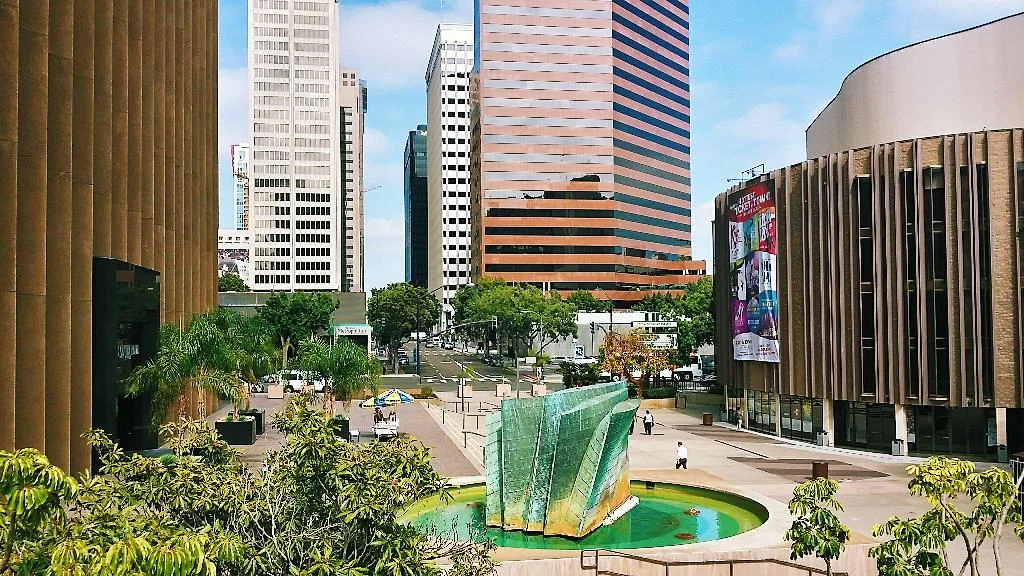
The great recession killed the suburbs. Since 2007, metropolitan cities across the country have experienced a migration of residents towards urban living environments. This trend could be the answer to urban decay, with many seeking more fiscally practical and cohesive living arrangements. Referred to as "re-urbanization", the trend is the opportunity San Diego needs to return neglected areas of downtown to their former prestige. Large adaptive reuse and infill projects have gained traction from Little Italy to East Village, including dynamic public spaces, but it will require buy-in from local employers before the transformation of 'America's Finest City' reaches its potential.
The great recession killed the suburbs. Since 2007, metropolitan cities across the country have experienced a migration of residents towards urban living environments. This trend could be the answer to urban decay, with many seeking more fiscally practical and cohesive living arrangements. Referred to as "re-urbanization", the trend is the opportunity San Diego needs to return neglected areas of downtown to their former prestige. Large adaptive reuse and infill projects have gained traction from Little Italy to East Village, including dynamic public spaces, but it will require buy-in from local employers before the transformation of 'America's Finest City' reaches its potential.
The new Central library, the renovation of Horton Plaza, and open space meeting areas like Quartyard, SMARTSfarm and Silo at Makers Quarter have created a buzz about downtown. The supply of living spaces downtown is increasing, and the increase in population is expected to drive an increase in demand for workspace. For office space users, this means considering locating you company near your employees or desired talent pool. If your employees demographic age is 23 – 35, odds are they reside in the area between Mission Valley, the beach communities, and Downtown. This demographic seeks employment in walk-able, livable urban areas which complement their lifestyle. Companies seeking top talent may need to consider their proximity to "live-work-play" environments in order to stay competitive. Planned developments like Makers Quarter and IDEA are courting large employers with build-to-suit options for mixed-use office/retail/residential spaces, which resemble small cities within a city. The challenge in bringing these developments to life is pre-leasing to an anchor tenant large enough to initiate construction. Recently San Diego companies The Active Network and Websense, who occupied approximately 100,000 SF each, relocated out of California, leaving a small pool of local tenants large enough these projects.
Downtown's diverse tenant mix now includes technology and professional service providers in numerous co-working spaces and incubators. The area is a logical place to create a hub for hi-tech entrepreneurs. Accelerators like Plug n Play, who expose early stage hi-tech companies to Silicon Valley capital, and Evonexus, the Qualcomm sponsored incubator located in the heart of the Civic-Core district, provide mentorship and strategic funding to start-ups making high-tech innovations. It’s likely that these businesses would stay in the area as they grow, creating a greater demand for office and living spaces. The economic benefit is measurable, according to Steven Cox, CEO of Take-Lessons "there will be 1,500 to 2,000 tech jobs created here in San Diego. The average tech job pays about $103,000. So, when you take a look at how technology and innovation fuels the economy, it’s really interesting to see how that’s growing, specifically in downtown." A study completed by The Downtown Partnership, concluded that every tech job brought downtown create(s) another 1.6 jobs meaning a welcome increase in new restaurants and retail businesses serving the area. All of this could lead to an increase the tax base in the area, resulting in more money for public works and infrastructure.
Employers do face obstacles in relocating downtown where parking spaces are scarce and costly. On-site parking downtown is generally granted at 1 parking space per one thousand feet of leased space, not attractive for high density space users with a large percentage of employees who commute from the suburbs. Parking rates in mid to high-rise office buildings range from $130 - $200/stall/month, and while surface lots in the area charge slightly less, this added expense prevents many employers from relocating to the area. The planned trolley expansion may ease these concerns, however service along the new line to UTC wouldn’t commence until 2019.
Downtown San Diego has come a long way, and is becoming more attractive to young companies, and businesses locating closer to talent or their employee base. It may take years for San Diego to have a thriving downtown sector, but with support from employers, and local government, will one day reach its potential.

What's Next for Tech?
During a recent IoT (Internet of Things, for those not familiar) Startup breakfast I realized a few things; the internet is going places most people can’t fathom, and I should have tried harder in Science class.
During a recent IoT (Internet of Things, for those not familiar) Startup breakfast I realized a few things; the internet is going places most people can’t fathom, and I should have tried harder in Science class.
While we are still a long way from flying cars and ‘Rosie’ the robot maid, scientists and entrepreneurs are creating devices which will be embedded into everything from farm equipment, to your refrigerator, to your jeans; more importantly, these devices will communicate with manufactures, service stations, medical personnel, and even each other. The processors for these embedded devices are getting smaller, cheaper, more powerful, and thanks to visionaries like SIGFOX, low power networks will exist globally to efficiently allow these devices to communicate, and retain a longer service life.
As I was dreaming of a future utopia that would make Doc Brown gasp, a presenter from Wind River (leaders in embedded software for connected systems) brought up the reality that interoperability, or the ability for devices to communicate with each other, has yet to be solved. The issue, today’s innovators are creating devices utilizing their own protocols with no standard way of translating that language. Add the implications a network security breach could have on a country full of connected, semi-automated devices or wearables, and we unveil the hurdles entrepreneurs face before I can safely own a self-driving vehicle that tells my self-maintaining refrigerator to order more beers after a long day.
How do we bridge the gap between today’s standard of living, and tomorrow’s standard of excellence? As technology entrepreneurs create applications for the future, the means by which to fund these innovations has become more robust. According to San Diego Venture Group’s David Titus "venture capital investment is up to its highest level since 2009, an estimated $30 billion in funding."
While these investment dollars are primarily chasing companies with market traction, angel investors have been seeding start-up and early stage companies that show promise in solving some of these issues.
Venture capital used to look for companies in a great market, or a product and team, now they also want companies to be killing it," says Titus.
The growth of start-up communities, hubs like CyberTech, and incubators likeEvoNexus that encourage collaboration will help bring well researched solutions to investors, and then to market.
The future is bright, and my sunglasses will know it.